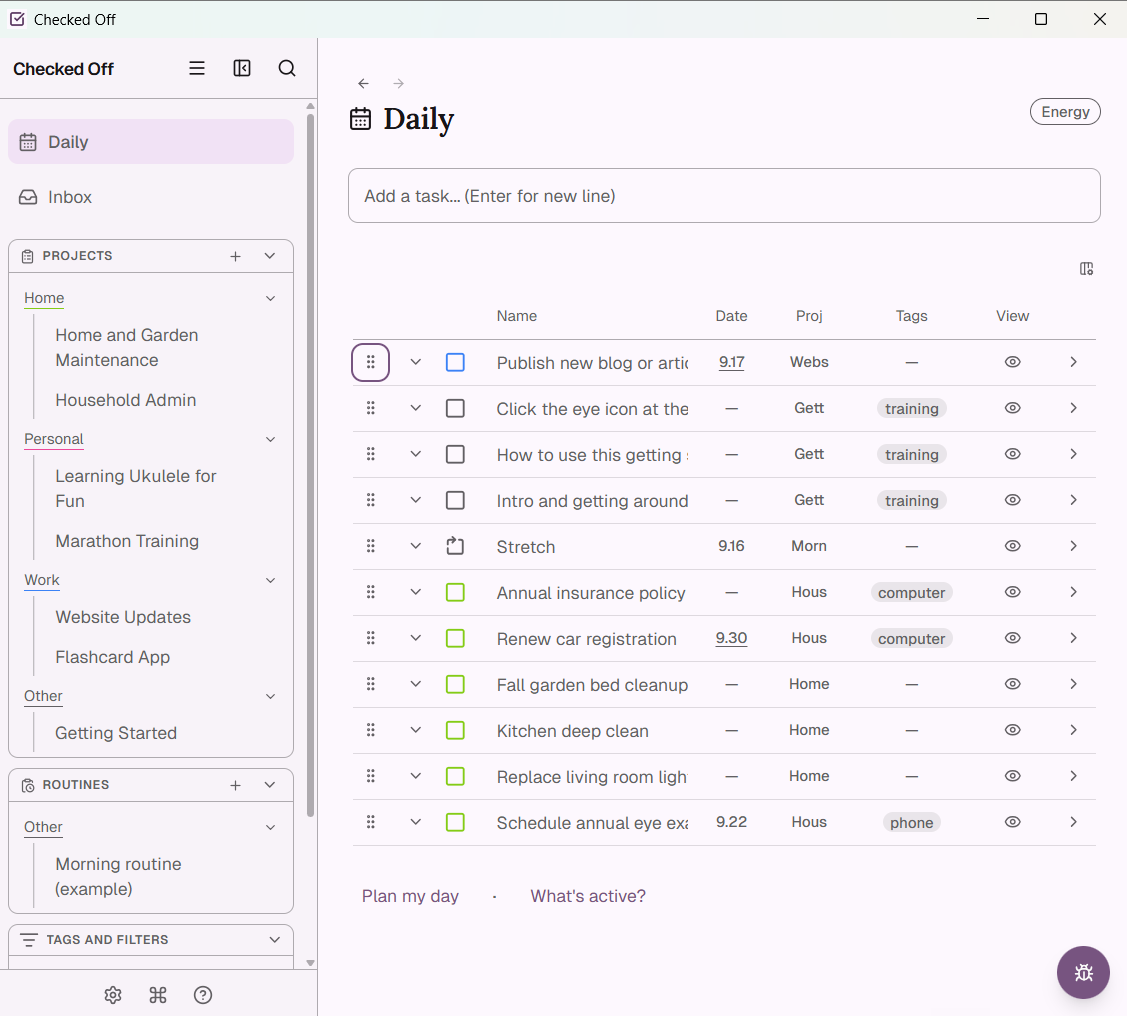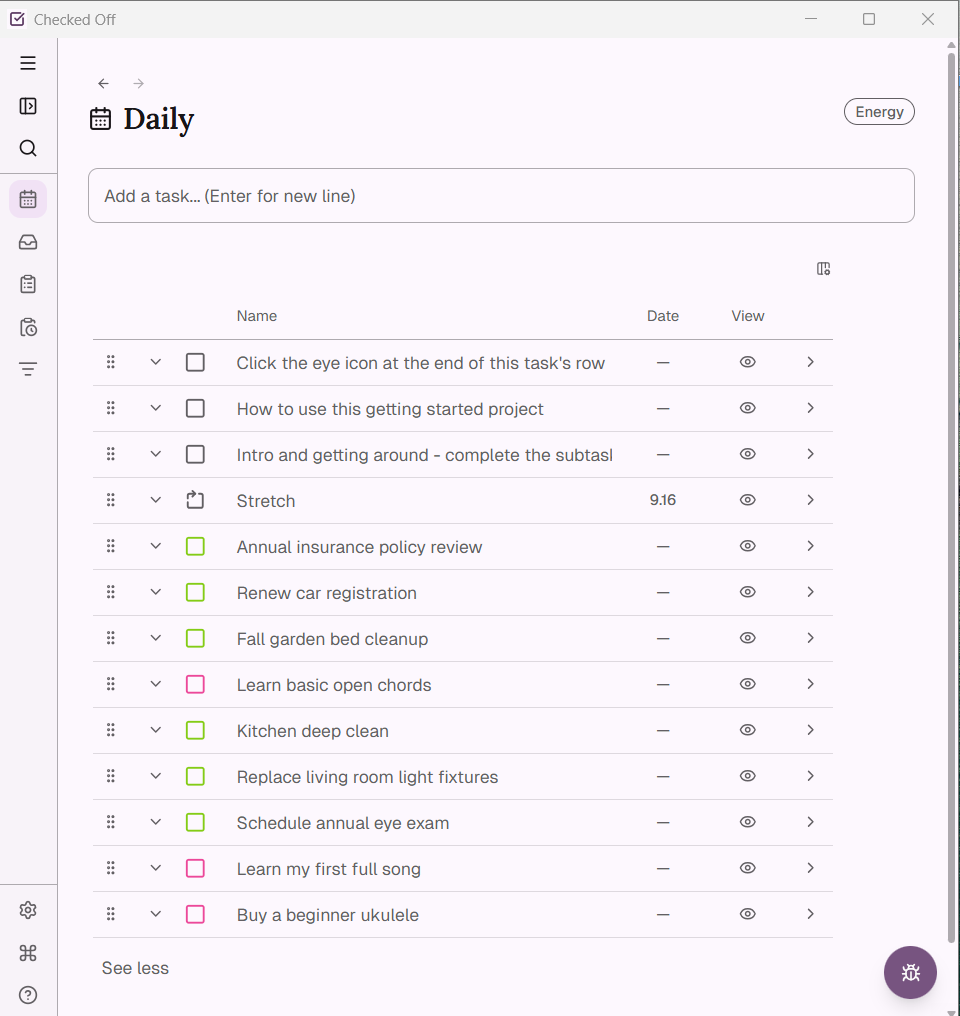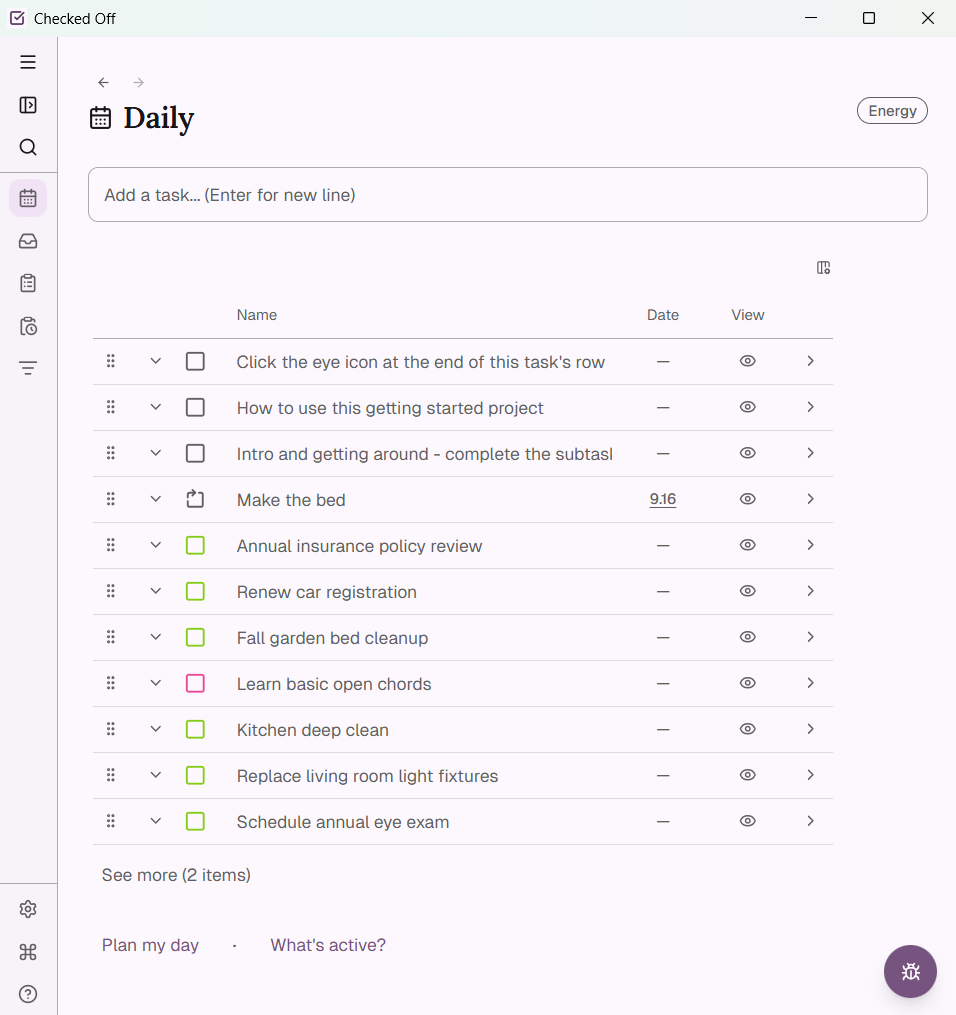
What it is. When you plan your day in Checked Off, you pick how many tasks to bring in from each active project - and the app enforces a total daily capacity. The default is five hours of estimated work, or ten items if estimates aren’t available. Both limits are adjustable. Tasks beyond the limit are hidden behind a “show more” toggle rather than displayed. You never see your full backlog inside the daily view.
The problem it solves. Every other task manager shows you everything you could possibly do today. The assumption is that more visibility leads to better choices. It does not. It leads to overestimation, decision fatigue, and a daily list that cannot be finished - which trains the user to stop trusting the list at all.
The structural issue is that most of us are bad at estimating how much work a day can hold. Consistently, predictably, and by a large margin - bad. And the bias runs in one direction: we think today will fit more than any day has ever actually fit.
The research behind it. The planning fallacy (Buehler, Griffin, and Ross, 1994) is one of the most replicated findings in the judgment-and-decision-making literature. When people estimate how long a task or set of tasks will take, they underestimate - even when they have detailed knowledge of how long similar tasks have taken in the past. The bias persists under almost every intervention researchers have tried. Telling people about the bias does not fix it. Having them list reasons the task could take longer barely fixes it.
What does fix it, to a meaningful degree, is constraint. If the tool imposes a cap, people plan inside the cap. If the tool doesn’t, people plan past whatever a day can actually contain, and every day ends with carryover and a sense of falling behind.
Checked Off’s daily capacity limits are not productivity theater. They’re a structural correction for a bias that is not going to correct itself through willpower or insight. The bounded daily list is theoretically completable - which makes the empty-list state a real success condition, not a receding horizon.
For the fuller picture of how Checked Off is different day-to-day, see What Checked Off actually is, and how it’s genuinely different on checked-off.321oak.com.